
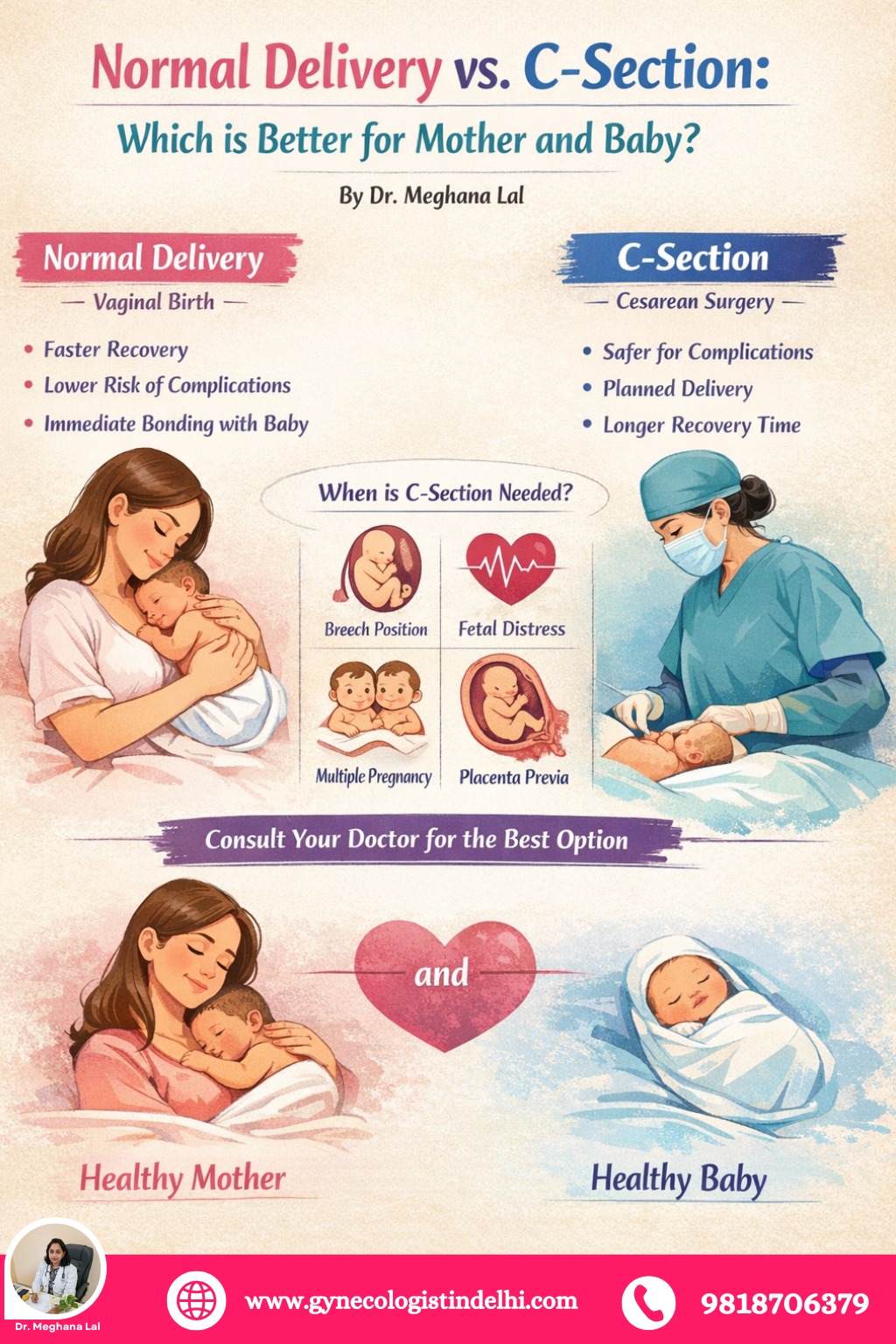
Normal Delivery vs C-Section: Understanding the Difference
Choosing how a baby is delivered is an important part of pregnancy and childbirth. Two common methods are normal delivery and cesarean section, also called a C-section. Both are safe in the right medical situation, and each has its own advantages, risks, and recovery experience. The best choice always depends on the health of the mother and baby.
What is Normal Delivery?
Normal delivery, or vaginal birth, is the natural process of giving birth through the birth canal. It usually involves labor contractions, cervical dilation, and the baby being delivered without major surgery.
What is a C-Section?
A C-section is a surgical procedure in which the baby is delivered through cuts made in the mother’s abdomen and uterus. It may be planned in advance or performed in an emergency if vaginal delivery is not safe.
Benefits of Normal Delivery
Normal delivery is often recommended when there are no major medical complications.
Advantages for the mother:
-
Faster recovery
-
Shorter hospital stay
-
Lower risk of surgical complications
-
Less blood loss in many cases
-
Easier movement after birth
-
Quicker start to breastfeeding
Advantages for the baby:
-
Better clearing of lung fluid during birth
-
Early skin-to-skin contact
-
Easier start to breastfeeding
-
Exposure to beneficial bacteria that may support immunity
Challenges of Normal Delivery
Although normal delivery has many benefits, it may also involve:
-
Labor pain and long hours of contractions
-
Risk of vaginal tears
-
Pelvic floor weakness in some cases
-
Need for emergency intervention if labor does not progress
Benefits of C-Section
A C-section can be life-saving and is sometimes the safest option.
It may be recommended in cases such as:
-
Fetal distress
-
Placenta previa
-
Breech position in some pregnancies
-
Multiple previous C-sections
-
Obstructed labor
-
Certain maternal health conditions
Advantages of a C-section:
-
Can be planned in advance
-
Avoids prolonged labor pain
-
Helpful in emergencies
-
May reduce risk of birth injury in specific cases
Challenges of C-Section
Because it is major surgery, a C-section usually comes with:
-
Longer recovery time
-
More pain after delivery
-
Higher risk of infection
-
Longer hospital stay
-
Greater blood loss in some cases
-
Delay in mobility and routine activity
-
Possible complications in future pregnancies
Recovery: Normal Delivery vs C-Section
Recovery after normal delivery is usually quicker. Many mothers can walk, feed the baby, and return to light daily activities sooner. In contrast, recovery after a C-section may take several weeks because the body needs time to heal from surgery.
Normal delivery often allows a mother to feel physically independent earlier, while C-section recovery may require more rest, support, and pain management.
Which is Better?
There is no single answer for every pregnancy. Normal delivery is often preferred when it is safe because it is natural and recovery is usually easier. However, a C-section is not a lesser option. In many cases, it is the safest and most responsible medical choice.
The most important goal is not choosing one method over the other, but ensuring the safety of both mother and baby.
Final Thoughts
Normal delivery and C-section are both valid ways to bring a baby into the world. Normal delivery may offer faster recovery and fewer surgical risks, while a C-section can be essential in complicated or high-risk pregnancies. Mothers should discuss their health, pregnancy condition, and birth plan with their doctor to make the safest decision.
A healthy mother and a healthy baby should always be the true priority.