Post-Delivery Exercises: 6 Gentle Exercises for Faster and Healthier Postpartum Recovery
Meta Title: Post-Delivery Exercises: 6 Safe Exercises for New Mothers
Meta Description: Discover 6 gentle post-delivery exercises, including deep breathing, pelvic tilts, Kegel exercises, and walking. Learn how new mothers can support recovery with guidance from Dr. Meghana Lal, Gynaecologist in Delhi.
Suggested URL: /post-delivery-exercises-for-new-mothers/
Introduction
The arrival of a baby is a beautiful milestone in a woman's life. However, pregnancy and childbirth bring significant physical changes, and the body needs time, care, and patience to recover. Post-delivery exercises can support this recovery by helping new mothers gradually rebuild strength, improve mobility, and restore pelvic floor function.
Whether you have had a vaginal delivery or a C-section, the right postpartum exercise routine can help you regain confidence and feel more comfortable in your body. The key is to start gently, listen to your body, and follow your gynaecologist's advice.
Dr. Meghana Lal, a gynaecologist in Delhi, encourages new mothers to prioritise their recovery and choose exercises that suit their individual health and delivery experience.
Why Are Post-Delivery Exercises Important?
After childbirth, the abdominal muscles, pelvic floor, and back may feel weaker than before. Hormonal changes, interrupted sleep, breastfeeding, and the physical demands of caring for a newborn can also affect energy levels and emotional well-being.
Appropriate postpartum physical activity may help:
-
Strengthen the pelvic floor and support bladder control.
-
Improve abdominal and back muscle strength.
-
Reduce stiffness and support better posture.
-
Improve energy levels, mood, and overall fitness.
-
Support stress management and emotional well-being.
-
Help women gradually return to their usual daily activities.
Recovery varies from one woman to another. Exercise should support healing rather than put unnecessary pressure on the body.
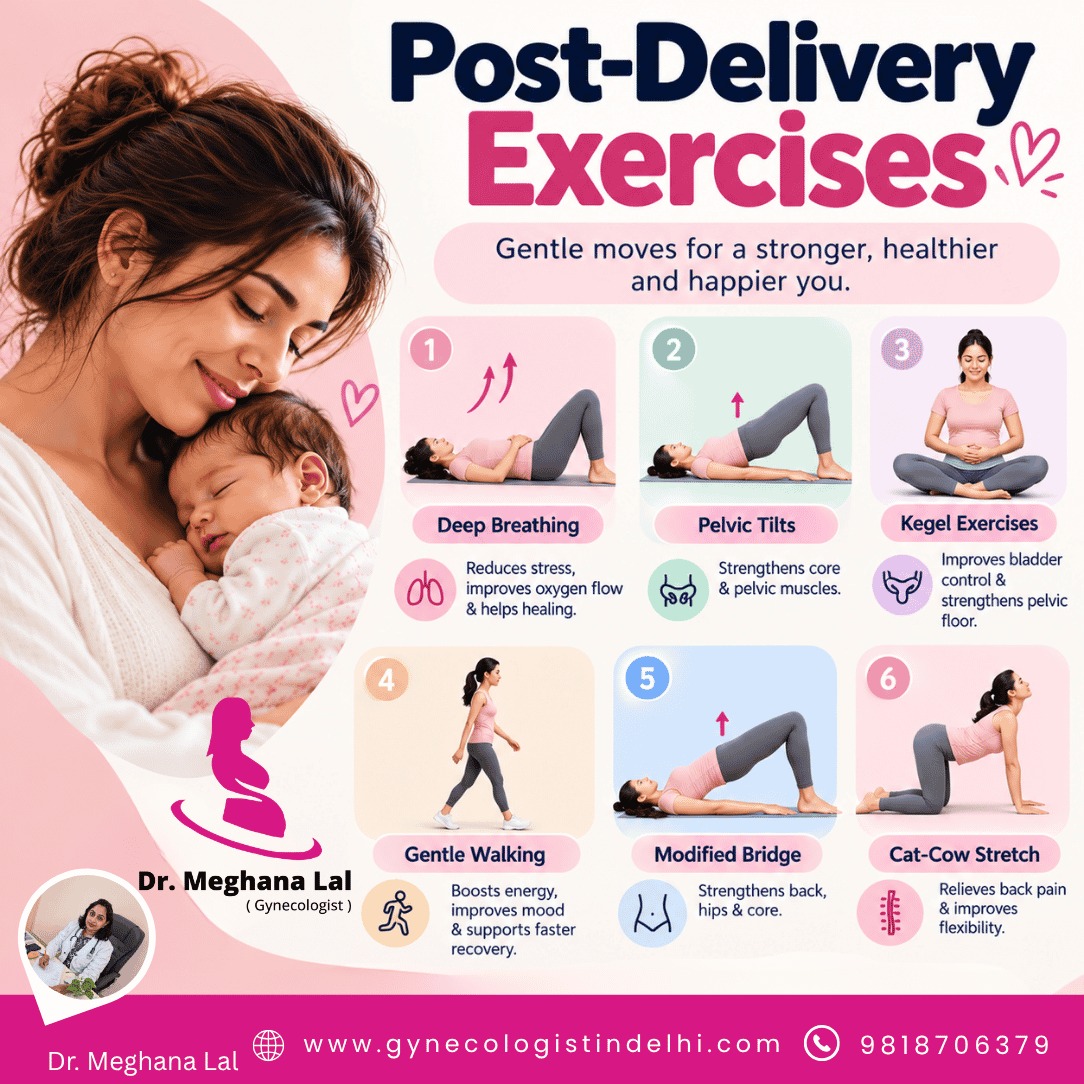
6 Gentle Post-Delivery Exercises for New Mothers
The following exercises can form part of a gradual postpartum recovery programme when medically appropriate.
1. Deep Breathing Exercises
Deep breathing is a gentle way to reconnect with your breathing pattern, relax the body, and manage stress during the early days after childbirth.
How to perform:
-
Lie comfortably on your back with your knees bent, or sit in a supported position.
-
Place one hand on your abdomen.
-
Breathe in slowly through your nose, allowing your abdomen to expand naturally.
-
Exhale gently without straining.
-
Repeat for a few comfortable breaths.
Benefits: Deep breathing encourages relaxation, helps manage stress, and supports gentle coordination between the diaphragm and abdominal muscles.
Tip: Keep your breathing natural and comfortable. Avoid holding your breath or forcing your abdomen inward.
2. Pelvic Tilts
Pelvic tilts are gentle movements that help improve awareness of the pelvic position and engage the abdominal muscles.
How to perform:
-
Lie on your back with your knees bent and feet flat on the floor or bed.
-
Keep your shoulders relaxed.
-
Gently tighten your lower abdominal muscles.
-
Tilt your pelvis slightly so your lower back moves closer to the supporting surface.
-
Return to your starting position slowly.
Begin with a few comfortable repetitions if your healthcare provider has cleared you for this movement.
Benefits: Pelvic tilts may help improve pelvic awareness, activate the abdominal muscles, and support comfortable movement of the lower back.
Tip: Stop if you experience pain, increased abdominal pressure, or discomfort around a C-section incision.
3. Kegel Exercises
Kegel exercises strengthen the pelvic floor muscles, which support the bladder, bowel, and pelvic organs. Pregnancy and childbirth can stretch or weaken these muscles.
How to perform:
-
Identify the muscles you would use to prevent passing gas.
-
Gently tighten and lift these muscles.
-
Hold the contraction briefly while continuing to breathe normally.
-
Relax the muscles completely before repeating.
-
Gradually increase the duration as your strength improves.
Avoid tightening your buttocks or thighs excessively. Do not routinely practise Kegels by stopping the flow of urine while using the toilet.
Benefits: Pelvic floor exercises can improve bladder control and support pelvic floor function.
Tip: Not every woman needs more strengthening. If you have pelvic pain, difficulty relaxing these muscles, or discomfort during exercise, seek advice from a pelvic health physiotherapist or your gynaecologist.
4. Gentle Walking
Walking is one of the simplest ways to reintroduce physical activity after childbirth.
How to begin:
-
Start with a short, comfortable walk indoors or in a safe outdoor area.
-
Maintain a relaxed pace and comfortable posture.
-
Increase the duration gradually as your energy and recovery allow.
-
Rest whenever you feel tired.
Benefits: Walking can improve circulation, support cardiovascular health, increase energy, and help improve mood.
Tip: Start with short walks rather than aiming for a fixed distance. Your recovery, delivery method, and medical condition should determine your progress.
5. Modified Bridge Exercise
A modified bridge gently engages the gluteal muscles and the muscles around the hips and trunk. It is a progression exercise rather than a requirement during the earliest stages of recovery.
How to perform:
-
Lie on your back with your knees bent and feet flat on the supporting surface.
-
Breathe normally and gently engage your abdominal and pelvic floor muscles if comfortable.
-
Slowly lift your hips only as far as feels comfortable.
-
Avoid arching your lower back or holding your breath.
-
Lower your hips gently.
Benefits: When appropriate, modified bridges can help rebuild hip and gluteal strength and support overall trunk stability.
Tip: Attempt this exercise only when your healthcare provider considers it suitable. Stop if you notice pain, pelvic heaviness, abdominal bulging, or pressure around your incision.
6. Cat-Cow Stretch
The cat-cow stretch involves gentle movement of the spine and may help improve mobility and relieve stiffness.
How to perform:
-
Position yourself on your hands and knees on a comfortable mat.
-
Keep your hands beneath your shoulders and knees beneath your hips.
-
Slowly round your back while gently tucking your pelvis.
-
Return to a neutral spine and gently extend your back without forcing the movement.
-
Repeat slowly while coordinating the movements with your breathing.
Benefits: This stretch may improve spinal mobility, encourage comfortable movement, and help relieve some back stiffness.
Tip: Avoid this position if kneeling causes discomfort or if your abdomen or C-section incision feels strained. Choose a comfortable alternative if necessary.
When Can You Start Exercising After Delivery?
There is no single timeline that suits every new mother. The appropriate starting point depends on the type of delivery, the presence of complications, pain levels, and individual recovery.
After an uncomplicated vaginal delivery: Gentle movement, walking, and suitable pelvic floor exercises may be possible within the first few days, depending on comfort and medical advice.
After a C-section: Recovery usually requires additional care because the abdominal muscles and surgical incision need time to heal. Begin with activities recommended by your obstetrician and increase exercise intensity gradually.
After a complicated delivery: Women who experience significant bleeding, infection, severe tears, high blood pressure complications, or other medical concerns may need an individually tailored recovery plan.
Before beginning more strenuous exercise, including running, jumping, heavy lifting, or intensive abdominal workouts, seek guidance from your healthcare professional.
Post-Delivery Exercise Precautions Every Mother Should Know
To support safe recovery, keep these precautions in mind:
-
Start slowly and increase activity only when it feels comfortable.
-
Avoid comparing your recovery with other mothers.
-
Drink enough water and eat balanced, nutritious meals.
-
Wear comfortable clothing and supportive footwear.
-
Avoid heavy lifting and high-impact activity until appropriately cleared.
-
Do not exercise through pain or significant exhaustion.
-
Ask for help if you experience pelvic floor symptoms or persistent back pain.
Stop exercising and seek medical advice if you notice increased vaginal bleeding, significant pain, pelvic heaviness, wound discomfort, or new urinary or bowel symptoms.
Seek urgent medical attention for chest pain, difficulty breathing, fainting, severe headache with visual changes, or one-sided leg pain or swelling. These symptoms may indicate a serious postpartum complication.
Can You Exercise After a C-Section?
Yes, many women can gradually return to physical activity after a C-section, but their recovery plan must account for surgical healing.
Gentle walking and other movements specifically recommended by the healthcare team may be introduced during recovery. More demanding abdominal exercises, bridges, and stretches should be delayed until they are appropriate for the individual's healing progress.
If you notice redness, discharge, increasing pain, or opening of the surgical wound, contact your healthcare provider promptly.
Do Post-Delivery Exercises Help With Weight Loss?
Exercise can contribute to long-term fitness and weight management after pregnancy, but weight loss should not be the main priority during the initial recovery period.
Focus first on healing, adequate nutrition, hydration, rest, and gradually rebuilding strength. Breastfeeding mothers should also ensure they are eating enough to support their nutritional needs.
Once medically appropriate, regular walking and a progressive exercise programme can help you work towards your long-term fitness goals.
Frequently Asked Questions (FAQs)
1. Which exercise is best immediately after delivery?
For many women after an uncomplicated birth, gentle breathing, comfortable mobility, and suitable pelvic floor exercises may be appropriate early options. Your healthcare provider can advise what is safe for your circumstances.
2. Can I do Kegel exercises after delivery?
Kegel exercises can often be started early when comfortable and medically appropriate. If you experience pelvic pain, difficulty relaxing the pelvic floor, or increased pressure, consult a qualified professional before continuing.
3. Can I do pelvic tilts after a C-section?
Pelvic tilts may be suitable for some women during recovery, but the timing depends on surgical healing, symptoms, and medical advice. Do not begin if the movement causes pain or strain.
4. When can I return to running or gym workouts?
The timing varies according to delivery type, healing, pelvic floor function, and individual risk factors. Obtain medical clearance and return progressively rather than resuming strenuous workouts abruptly.
5. How long should I exercise each day after delivery?
There is no universal duration for the earliest recovery period. Begin with small amounts of comfortable activity and increase gradually. The longer-term goal for many healthy adults is at least 150 minutes of moderate-intensity aerobic activity per week, when medically appropriate.
6. Can post-delivery exercises reduce back pain?
Gentle movement, suitable strengthening, and improved posture may help some women manage back discomfort. Persistent or severe pain should be assessed by a healthcare professional.
Conclusion: Give Your Body Time to Heal
Post-delivery exercises can play an important role in rebuilding strength, improving mobility, supporting pelvic floor health, and helping new mothers feel more confident. Deep breathing, pelvic tilts, Kegel exercises, gentle walking, modified bridges, and cat-cow stretches are potential options for a gradual recovery programme.
However, every postpartum journey is different. The safest approach is to choose exercises based on your delivery experience, symptoms, and individual medical needs.
Looking for postpartum recovery guidance in Delhi?
Dr. Meghana Lal, Gynaecologist in Delhi, can help you understand your postpartum health needs and discuss appropriate recovery options.
Book a consultation:
-
Website: www.gynecologistindelhi.com
-
Phone: 9818706379
Take your recovery one step at a time. Your health and well-being matter just as much as caring for your newborn.
Medical disclaimer: This article is for general educational purposes only and does not replace an individual medical assessment. Consult your gynaecologist before beginning or progressing a postpartum exercise programme.